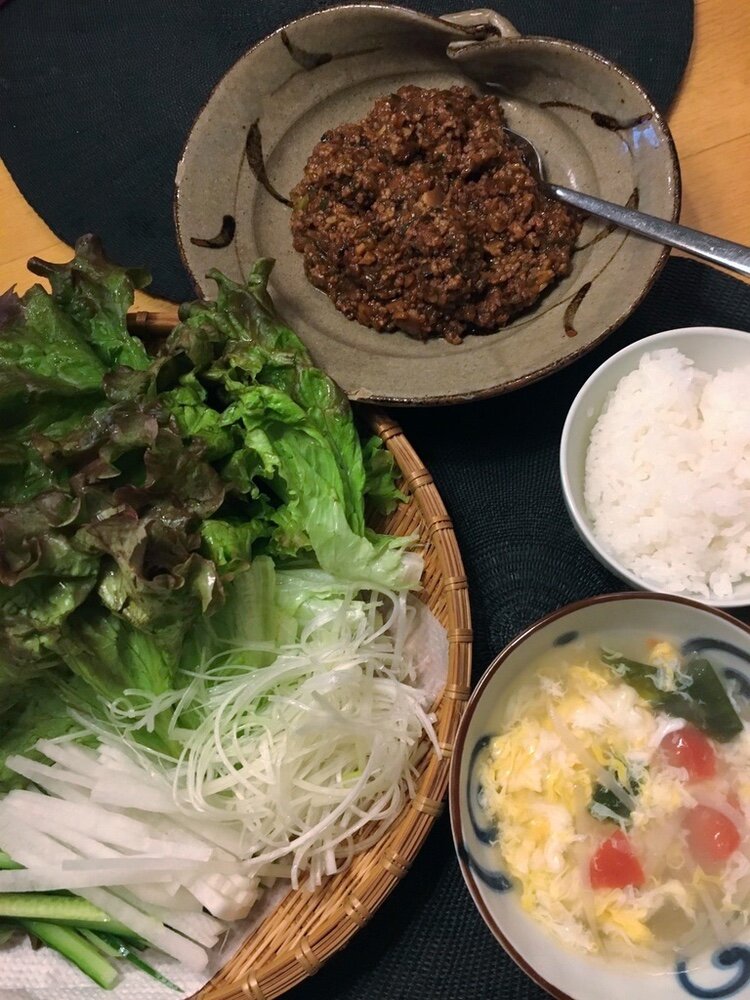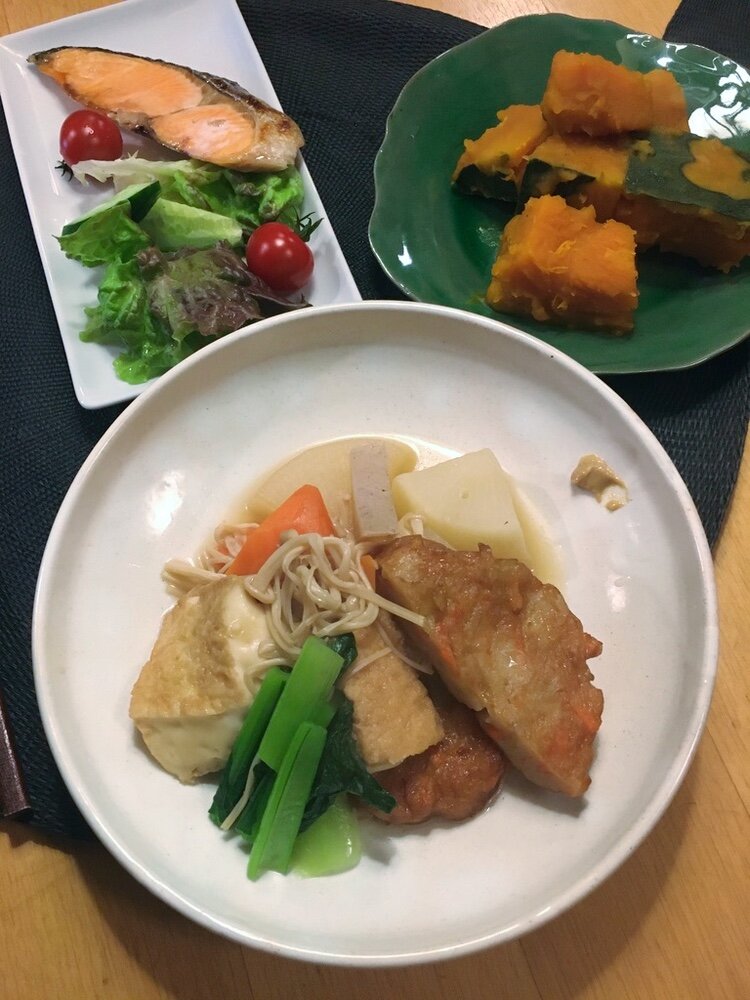
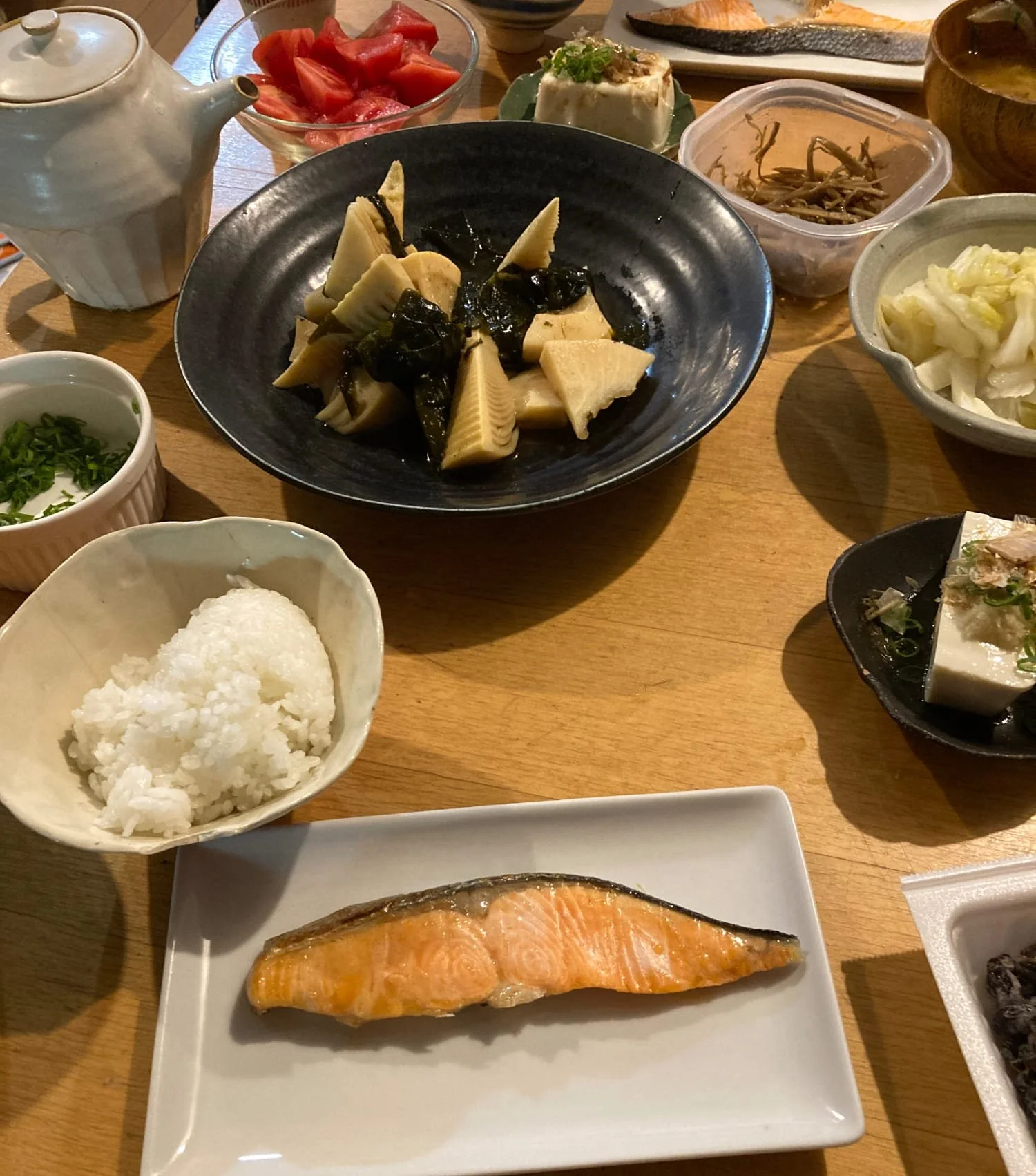
För att knyta an till gårdagens inlägg om hur japansk klassisk mat knappast ger någon kraftigare fetma, så får ni här se vår middag här hemma igår kväll.
Vi har alltså grillad lax som huvudrollsinnehavare närmast kameran. Mycket vanlig mat hemmavid som kan serveras till vilket som helst av dagens tre huvudmål. Jag tyckte att det var lite svårt att käka grillad eller stekt fisk till frukost i början av min tillvaro i Japan, men nu är jag van efter en massa besök nere hos svärmor i Nara där det sällan gick en hel dag utan fisk på bordet. Sedan har vi givetvis en skål kokt ris och en bit längre bort har vi en stor svart skål med inkokta bambuskott. Det är säsong för färska bambuskott just nu, så då äts det ofta i de flesta japanska hem. Snett till höger har vi en bit tofu med finhyvlad torkad och rökt bonito och lite finhackad salladslök. Direkt till höger om laxen har vi en förpackning med natto, de jästa sojabönorna som är en veritabel hälsobomb med nyttiga enzymer, vitaminerna C och K2, hälsosamma bakterier, antioxidanter och mineraler som mangan, koppar, järn och magnesium. Till sist en god dos fibrer. Till sist diverse inlagda grönsaker och en skål misosoppa. Middagsdrycken går också i hälsans tecken då vi drack grönt te.
Det är svårt att hitta något på bordet som kan kallas onyttigt, faktiskt - tvärtom så är det mesta sådant som man på engelska brukar kalla “super foods”. En stor del av förklaringen till japanens långa livslängd, drygt 81 för män och drygt 87 för kvinnor i snitt.